
Last Isle: Survival
chuang gamesRole Playing
4.376.00 Reviews
- Version
- 1.0.5
- Installs
- 100.00K
- Age Rating
- Everyone 10+
Screenshots

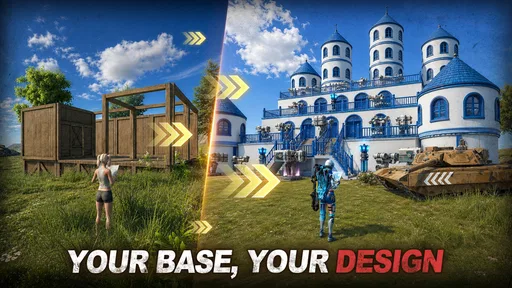
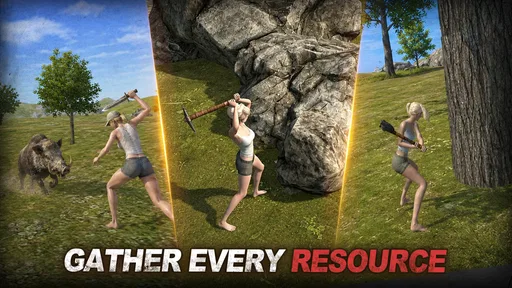
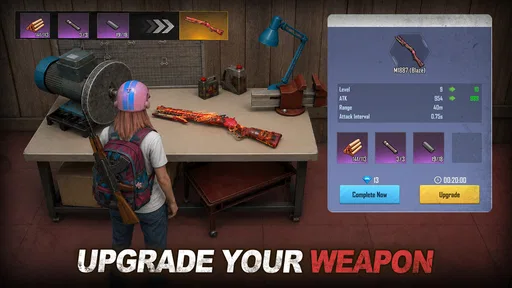


Our Review of Last Isle: Survival
 Analysis by Appyee
Last Isle: Survival caught my attention because it promises a harsher kind of role-playing adventure than the usual collection of battles and upgrades. Its central idea is easy to understand: survive a flood, make practical decisions, take risks for better resources, and escape before a run falls apart. I found the first sessions immediately readable, but the more important question is whether that loop remains interesting after the novelty wears off.
Developed by chuang games, this free-to-play role-playing game puts pressure on every expedition. The flood is not just background decoration; it gives the whole experience a sense of urgency. I was rarely thinking only about defeating an opponent. I was also weighing whether to keep exploring, return with what I had, or gamble on finding something more valuable. That constant calculation is where the game feels most distinctive.
The game is available for players aged Everyone 10+ and requires Android 8.0 or later. It has reached over one hundred thousand installs and holds a 4.3 average from around two thousand ratings, which suggests that its basic survival formula has found a receptive audience. Those figures do not automatically make it a long-term recommendation, though. In my experience, the real test is how much meaningful decision-making remains once the opening discoveries become familiar.
Why the first week feels so engaging
The opening appeal comes from the combination of building, raiding, and extraction. Each activity supports the others, so progress does not feel like a single straight line. Gathering helps me prepare, preparation makes a risky raid more manageable, and a successful extraction gives me a reason to improve the next attempt. That structure creates a satisfying rhythm without requiring me to understand every consequence immediately.
I especially liked how the flood changes the way I approach time. In a slower role-playing game, I can often clear an area methodically and collect everything. Here, lingering feels dangerous even when the immediate enemies are manageable. I have to decide which supplies matter, which detours are worth taking, and when a safe return is better than a potentially larger haul. That makes ordinary movement feel more purposeful than it does in many conventional mobile RPGs.
During a typical evening session, I might begin by checking what I need for the next improvement, enter an area looking for the relevant materials, and then alter the plan after finding an unexpected opportunity. If the route becomes too costly, extracting early is not a failure; it is often the sensible choice. The game works best when I treat survival as the objective rather than measuring every run by how much territory I cleared.
The building side also gives the early game a useful sense of direction. Instead of treating collected items as disposable rewards, I have a reason to think about how they support future attempts. A good upgrade can make the next expedition more comfortable, but spending resources too quickly can leave me unprepared for a harder outing. That tension is more interesting than simply pressing an upgrade button whenever a new level becomes available.
Raiding adds another layer of uncertainty. I enjoy it because it turns preparation into a practical skill rather than a menu exercise. Before taking a risk, I consider whether my current equipment and supplies justify the possible return. A player who rushes in without a plan may still have exciting moments, but the game rewards a more measured approach. My most successful early runs came from setting a modest goal and leaving once I had achieved it.
New players should resist the temptation to chase every visible reward. The most useful habit I developed was choosing a priority before entering an expedition. If I needed a particular building improvement, I focused on materials connected to that goal instead of filling my inventory with anything available. This reduced wasted trips and made each successful extraction feel more deliberate.
Another practical tip is to separate experimentation from progress. I used some early runs to learn how aggressive I could be, but I avoided risking everything when I was carrying resources needed for an upgrade. That distinction matters because the game’s appeal depends on tension, not constant punishment. When I treated every expedition as a test rather than a final exam, the setbacks became easier to accept.
The first week also reveals who will enjoy this game most. It suits players who like making choices under pressure and who do not mind returning to familiar activities with a different objective. It is less suitable for someone looking for a relaxed role-playing game where every session guarantees visible progress. The flood and extraction structure mean that a cautious retreat can be the correct outcome, even if it feels less exciting than a full victory.
What remains valuable after the opening discoveries
After the initial excitement, the game’s recurring value depends on whether the player continues to find meaningful reasons to return. I found that its strongest long-term quality is not the simple act of collecting resources. It is the way a planned run can change when circumstances force a new decision. A route that looks safe at the start may become unattractive once the cost of continuing rises, and that keeps familiar objectives from feeling completely automatic.
The building loop helps maintain that sense of purpose. Improvements are more satisfying when they solve a problem I have personally encountered. If a previous expedition ended because I lacked preparation, a later upgrade feels like a response to my own mistake rather than an abstract increase in power. This is a better form of progression than upgrading everything indiscriminately, because it connects development to experience.
Still, the month-to-month value is likely to vary from player to player. Someone who enjoys optimizing routes and testing different levels of risk may continue finding small decisions worth revisiting. Someone who needs frequent new content or a constantly changing story may feel the routine sooner. The game’s foundation is built around repeating a survival cycle, so its durability comes from decision quality rather than endless novelty.
I would recommend setting personal objectives to keep the loop fresh. One session can focus on a specific construction goal, another on learning a safer route, and another on seeing how much risk is reasonable before extracting. This approach gives familiar activities different purposes. Without those self-imposed goals, the sequence of preparing, raiding, and returning can begin to feel like maintenance rather than adventure.
The free entry point makes it easy to test that cycle without committing money first. However, free-to-play design can affect how comfortable the long-term experience feels. In-app purchases range from $0.49 to $99.99 per item, so I would approach spending carefully and decide in advance whether optional purchases fit my budget. The important question is not whether a purchase exists, but whether I still enjoy making decisions when I ignore it.
My advice is to play long enough to experience both successful and unsuccessful extractions before spending. Early enthusiasm can make any upgrade appear essential, while a few more sessions reveal whether it genuinely improves the way you play. If the game remains enjoyable when I am relying on planning rather than purchases, that is a healthier sign of lasting value.
Compared with a traditional mobile role-playing game, this one places more emphasis on the expedition itself. Many alternatives focus on character strength, automated battles, or collecting a large roster. Last Isle: Survival feels more immediate because the value of a run can be lost if I misjudge the return journey. Players who prefer passive progression may find that demanding, while players who want their choices to matter may appreciate the difference.
It also differs from a pure base-building game. Construction is important, but it does not replace the need to venture out and make decisions in the field. Likewise, it is not simply a raid-focused experience where aggression is always rewarded. The most useful rhythm comes from balancing ambition with preservation. That balance is a genuine strength, although it can also make the game feel slower to players who want constant action.
The maintenance burden behind the survival loop
Every recurring game asks for some form of maintenance, and here that burden comes from repeatedly preparing for the next attempt. I need to pay attention to what I am trying to build, what I can afford to risk, and whether a particular outing is worth the time. None of that is difficult, but it means the game rewards a player who enjoys light planning rather than someone who wants to open an app and play without thinking.
The most efficient routine I found was to keep a short mental checklist before each expedition: identify one main objective, decide what would justify turning back, and avoid carrying more risk than the objective requires. This prevents the familiar survival-game mistake of continuing simply because a run has already taken time. A run that ends safely can be more useful than one that produces a larger haul but leaves the next attempt poorly prepared.
That routine also helps with limited playtime. If I only have a short break, I can choose a narrow target and treat the session as a focused outing. If I have more time, I can accept a longer route and take a bigger risk. The game is more flexible when I decide the scale of the session beforehand instead of expecting every visit to produce the same kind of progress.
On the other hand, this maintenance can become tiring. Repeating preparation, collecting, and extraction is satisfying while I am still learning, but less exciting when the next improvement feels predictable. Players who prefer story-heavy role-playing games may miss a stronger narrative reason to return. Players who enjoy systems and optimization will probably tolerate the repetition longer because each run offers another chance to refine a method.
The current version is 1.0.5, and I found it best to approach the game as an evolving mobile experience rather than a one-time campaign. That does not mean I would install it purely in the hope of future additions. It means I would judge it by the loop available now and treat later changes as a bonus, not as a promise. For a long-term habit, the present-day routine must already be enjoyable.
Where fatigue begins to replace tension
The same mechanics that create suspense can eventually create friction. If I lose a run after taking an unnecessary risk, the lesson feels fair. If I repeat the same preparation only to reach a familiar result, the tension weakens. The difference is whether I feel that my decision caused the outcome. Long-term enjoyment depends on the game continuing to make choices feel consequential rather than merely asking me to repeat a checklist.
Another source of fatigue is the temptation to overvalue every resource. Survival games naturally encourage careful hoarding, but excessive caution can make sessions feel timid. I had to learn that not every expedition needed to maximize its return. Taking a controlled risk occasionally kept the experience lively, while always choosing the safest possible route made the game feel more like inventory management.
There is also a psychological cost to extraction-focused progress. Returning safely with a modest reward can be correct, yet it may not feel as rewarding as defeating a major opponent or completing a dramatic quest in another role-playing game. If you need constant moments of triumph, this structure may seem underwhelming. Its satisfaction is quieter: better preparation, smarter timing, and fewer avoidable losses.
Spending pressure can add to that fatigue for some players. Because the purchase range extends from $0.49 to $99.99 per item, I would not recommend approaching the game casually with an open-ended budget. A small, fixed limit is more sensible if you choose to buy anything. I would also skip it entirely if the possibility of optional spending makes resource decisions feel less like strategy and more like pressure.
The age rating of Everyone 10+ makes it accessible to a broad audience, but accessibility does not mean it will suit every temperament. Younger players may enjoy the clear survival objective, while parents should still remember that free-to-play games can include optional purchases. Adults who want a calm, low-commitment game may find the repeated risk-and-return cycle more demanding than expected.
Who should make room for it
I think Last Isle: Survival earns a place on an Android device for players who enjoy compact survival decisions, base improvement, and the possibility that a good run can turn bad through overconfidence. It is particularly appealing if you like games where retreat is a meaningful choice and where preparation matters as much as combat or exploration.
I would also recommend it to people who enjoy setting their own challenges. Try to improve the reliability of a route, complete a construction objective with fewer wasted trips, or learn when a raid is no longer worth continuing. These goals make the game feel deeper than its short store summary suggests because they turn repetition into practice.
I would skip it if your ideal role-playing game is built around a rich campaign, constant character dialogue, or a large collection of heroes. I would also look elsewhere if you dislike losing potential progress through a poor decision or if you want a game that plays itself while you watch. A more conventional RPG will probably be a better fit for relaxed progression, while a dedicated strategy game may offer deeper planning for players who want greater complexity.
For someone deciding whether to install it, my practical recommendation is to treat the first sessions as a trial of the loop rather than a race toward upgrades. Pay attention to whether you enjoy choosing when to leave, not just whether you enjoy finding rewards. Notice whether building improvements solve problems you have actually faced. If those two parts feel satisfying, the game has a reasonable chance of becoming a recurring habit.
The developer, chuang games, has built an experience whose strongest identity comes from the relationship between danger and preservation. I like that the game does not reduce survival to simply becoming stronger. A stronger setup helps, but judgment still matters. That gives the early game a welcome sense of agency and makes mistakes useful when I can understand exactly where my plan went wrong.
My long-term verdict
Last Isle: Survival is more convincing as a focused survival role-playing game than as an all-purpose mobile RPG. Its first-week appeal is clear: the flood creates urgency, building gives resources a purpose, raiding introduces risk, and extraction makes every decision matter. Those parts work together naturally, and I found myself thinking about the next run even after closing the game.
Its long-term future is less certain, not because the core idea is weak, but because repetition eventually exposes how much variety the routine can support. Players who enjoy refining habits and making their own objectives may keep finding value. Players who depend on frequent surprises, story developments, or large new systems may reach the end of its appeal sooner.
My final recommendation is positive but measured. I would install it for free, play cautiously at first, and avoid spending until the survival loop proves that it can hold my attention beyond the opening excitement. The real test is whether planning an extraction still feels rewarding after the flood stops feeling new. For me, the answer is yes for players who enjoy deliberate risk, but not for anyone seeking a frictionless or heavily narrative role-playing adventure.
Verdict
Strengths of Last Isle: Survival
- Open-world exploration encourages discovery and resource gathering.
- Crafting system offers useful tools, weapons, and survival equipment.
- Island environments provide varied locations to explore and loot.
- Progression gives players clear goals as they improve their survivor.
- Offline play may suit users who prefer survival games without constant social interaction.
Limitations of Last Isle: Survival
- Resource gathering can become repetitive during longer play sessions.
- Some upgrades may require considerable grinding to unlock.
- Combat controls can feel awkward during encounters with multiple enemies.
- Inventory space may become restrictive when carrying essential materials.
- Device performance and battery use may vary in larger island areas.
Similar Picks in This Category
View All
Hair Dye
CrazyLabs LTD4.4

Monster High™ Beauty Salon
CrazyLabs LTD4.5

Bus Simulator - Bus Games 3D
Jima Apps4.4

Flight Pilot: 3D Simulator
Wildlife Studios4.1


Super Stylist Fashion Makeover
CrazyLabs LTD4.4
Frequently Asked Questions
What is Last Isle: Survival about?
Last Isle: Survival is a mobile survival adventure game set on a dangerous, prehistoric island. After arriving in an unfamiliar environment, you must explore, collect resources, craft tools, build shelter, and protect yourself from hostile creatures and other threats. Progress depends on managing hunger, health, equipment, and materials while gradually uncovering more of the island’s secrets.
Can Last Isle: Survival be played offline?
The game may allow some survival and exploration features to work without a constant internet connection, but online functions can require access to the internet. Multiplayer elements, account synchronization, advertisements, events, updates, and certain purchases may not be available offline. Before downloading, players should check the current store description because offline support and online requirements can change with updates.
Is Last Isle: Survival free to download and play?
Last Isle: Survival is generally available as a free download, allowing players to begin exploring the island without paying upfront. However, free-to-play games commonly include optional in-app purchases, advertisements, or systems that speed up progression. These purchases are not necessarily required to enjoy the core survival experience, but users should review the payment settings and disable purchases if children use the device.
What devices are compatible with Last Isle: Survival?
Compatibility depends on the operating system, device model, available storage, and the version of the game currently published. Because Last Isle: Survival includes 3D environments, animated creatures, and resource-heavy effects, older phones or tablets may experience longer loading times, reduced graphics quality, overheating, or performance drops. Check the official Google Play or App Store listing before installing.
Does Last Isle: Survival include multiplayer or social features?
Last Isle: Survival may include online or social elements that let players interact with other users, depending on the version available in their region. These features can involve cooperation, competition, shared progression, rankings, or communication tools. An internet connection and a supported account may be required, and younger players should use privacy and parental-control settings when participating in online interactions.
Play our best games!


